Brightstar Resources (BTR:AU) has announced Drilling recommences at Yunndaga
Download the PDF here.
This post appeared first on investingnews.com


Brightstar Resources (BTR:AU) has announced Drilling recommences at Yunndaga
Download the PDF here.
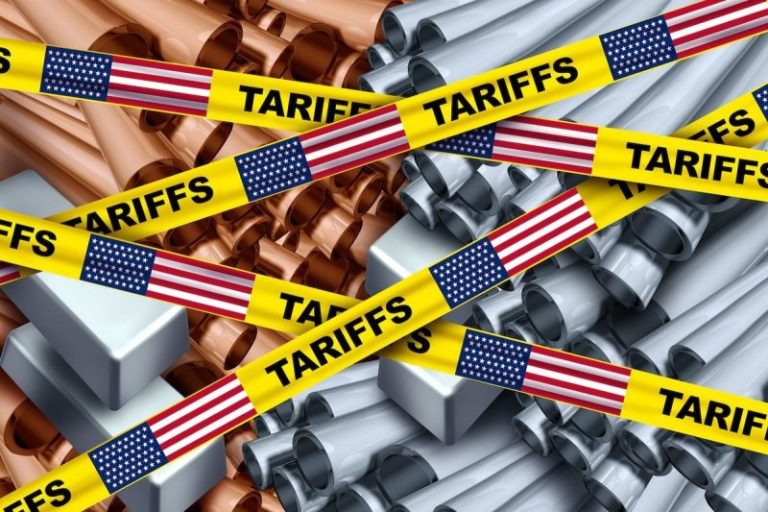
US President Donald Trump said Tuesday (July 8) that he plans to impose a 50 percent tariff on all copper imports, a dramatic escalation of his administration’s use of targeted trade restrictions on national security grounds.
“I believe the tariff on copper, we’re going to make 50 percent,” Trump said during a White House cabinet meeting.
Though he did not provide a timeline, Commerce Secretary Howard Lutnick said in a subsequent CNBC interview that the tariff could take effect by late July or as early as August 1, with details to be posted on Trump’s Truth Social account.
The announcement triggered immediate market reaction. According to Reuters, copper futures for September delivery surged 13 percent on the day, closing at US$5.6855 per pound—its biggest single-day jump since 1989.
Traders cited fears of a supply crunch and price volatility as buyers scrambled to secure US-bound shipments ahead of the tariff implementation.
The decision marks a culmination of a months-long process that began in February, when Trump signed an executive order instructing the Department of Commerce to investigate whether copper imports posed a national security threat under Section 232 of the Trade Expansion Act of 1962.
The rarely used statute gives the president broad authority to impose tariffs or quotas if imports are deemed harmful to national defense or essential industries.
The copper tariff follows a similar pattern established during Trump’s first term, when the White House used Section 232 to levy tariffs on steel and aluminum.
Since returning to office, Trump has expanded his use of the provision to include automobiles, pharmaceuticals and critical minerals like rare earths.
The brunt of the copper tariff is expected to fall on key US trade partners — most notably Chile, Canada and Mexico, which collectively accounted for the majority of America’s US$17 billion in copper imports in 2024, according to US Census Bureau data.
Chile alone shipped US$6 billion worth of copper to the US last year.
Officials from Chile, Canada and Peru, have pushed back against the measure, arguing their exports pose no threat to US national security and citing long-standing free trade agreements.
However, none have been granted exemptions as of Wednesday (July 9), and negotiations remain in limbo.
The looming copper tariff comes on the heels of broader trade actions taken by the Trump administration. On Monday (July 7), the White House imposed stiff tariffs on imports from 14 countries, including Japan, South Korea, Malaysia, South Africa and Kazakhstan.
These levies, effective August 1, targeted a wide range of sectors, from steel and aluminum to automotive parts and textiles.
Despite its relatively small trade deficit in copper — the US exported US$11.3 billion and imported US$9.6 billion worth of the metal in 2024 — the White House argues that the country remains dangerously reliant on foreign refining and processing capacity.
The legal foundation for the copper tariff lies in Section 232, which allows the president to act unilaterally on trade when national security is at stake. Experts say the provision gives Trump more durable legal ground than his recent attempts to use emergency powers to implement broad, country-specific tariffs — some of which are being challenged in federal court.
“Section 232 tariffs are central to President Trump’s tariff strategy,” said Mike Lowell, a trade attorney with ReedSmith, in an interview with CNBC. “They aren’t the target of the pending litigation, and they’re more likely to survive a legal challenge and continue into the next presidential administration.”
The administration’s increasing reliance on Section 232 tariffs reflects a shift toward industrial policy motivated by supply chain security, particularly for materials with dual-use applications in civilian and defense sectors.
Copper is a case in point. Used extensively in electrical wiring, motors, semiconductors and military-grade communications equipment, the red metal has been classified as critical to US infrastructure and defense capabilities.
Analysts point out that demand for the red metal is set to surge in the coming years due to the ongoing energy transition and growing adoption of electric vehicles.
In April, Trump issued a separate executive order launching a Section 232 investigation into US reliance on imported critical minerals and processed rare earths, calling them “essential for national security and economic resilience.” The order cited specific applications in jet engines, missile guidance, radar systems and advanced electronics.
As of Wednesday, no formal timeline had been posted on Trump’s Truth Social account, and details around carve-outs or exemptions remained unclear.
For now, however, Trump appears undeterred. The head of state has already threatened that pharmaceuticals may be next in line for potential action.
Securities Disclosure: I, Giann Liguid, hold no direct investment interest in any company mentioned in this article.
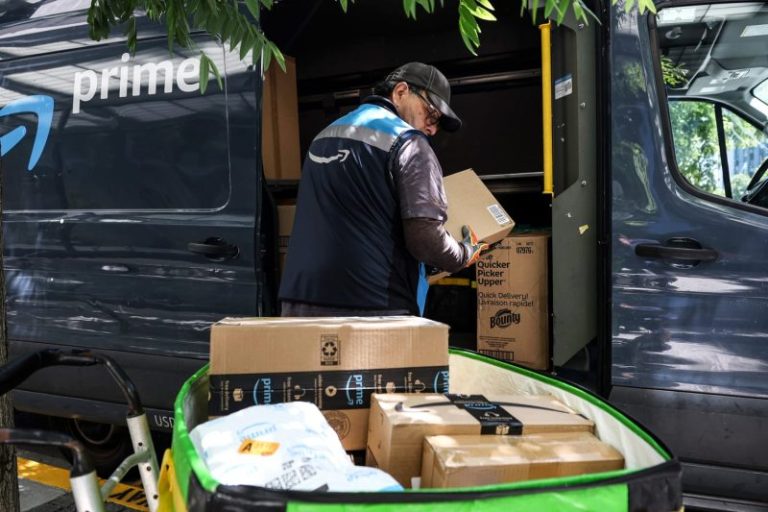
Amazon is extending its annual Prime Day sales and offering new membership perks to Gen Z shoppers amid tariff-related price worries and possibly some consumer boredom with an event marking its 11th year.
For the first time, Seattle-based Amazon is holding the now-misnamed Prime Day over four days. The e-commerce giant’s promised blitz of summer deals for Prime members started at 3:01 a.m. Eastern time on Tuesday and ends early Friday.
Amazon launched Prime Day in 2015 and expanded it to two days in 2019. The company said this year’s longer version would have deals dropping as often as every 5 minutes during certain periods.
Prime members ages 18-24, who pay $7.49 per month instead of the $14.99 that older customers not eligible for discounted rates pay for free shipping and other benefits, will receive 5% cash back on their purchases for a limited time.
Amazon executives declined to comment on the potential impact of tariffs on Prime Day deals. The event is taking place two and a half months after an online news report sparked speculation that Amazon planned to display added tariff costs next to product prices on its website.
White House Press Secretary Karoline Leavitt denounced the purported change as a “hostile and political act” before Amazon clarified the idea had been floated for its low-cost Haul storefront but never approved.
Amazon’s past success with using Prime Day to drive sales and attract new members spurred other major retail chains to schedule competing sales in July. Best Buy, Target and Walmart are repeating the practice this year.
Like Amazon, Walmart is adding two more days to its promotional period, which starts Tuesday and runs through July 13. The nation’s largest retailer is making its summer deals available in stores as well as online for the first time.
Here’s what to expect:
Amazon expanded Prime Day this year because shoppers “wanted more time to shop and save,” Amazon Prime Vice President Jamil Ghani recently told The Associated Press.
Analysts are unsure the extra days will translate into more purchases given that renewed inflation worries and potential price increases from tariffs may make consumers less willing to spend. Amazon doesn’t disclose Prime Day sales figures but said last year that the event achieved record global sales.
Adobe Digital Insights predicts that the sales event will drive $23.8 billion in overall online spending from July 8 to July 11, 28.4% more than the similar period last year. In 2024 and 2023, online sales increased 11% and 6.1% during the comparable four days of July.
Vivek Pandya, lead analyst at Adobe Digital Insights, noted that Amazon’s move to stretch the sales event to four days is a big opportunity to “really amplify and accelerate the spending velocity.”
Caila Schwartz, director of consumer insights and strategy at software company Salesforce, noted that July sales in general have lost some momentum in recent years. Amazon is not a Salesforce Commerce Cloud customer, so the business software company doesn’t have access to the online giant’s e-commerce sales and so is not privy to Prime Day figures.
“What we saw last year was that (shoppers) bought and then they were done, ” Schwartz said. “We know that the consumer is still really cautious. So it’s likely we could see a similar pattern where they come out early, they’re ready to buy and then they take a step back.”
Amazon executives reported in May that the company and many of its third-party sellers tried to beat big import tax bills by stocking up on foreign goods before President Donald Trump’s tariffs took effect. And because of that move, a fair number of third-party sellers hadn’t changed their pricing at that time, Amazon said.
Adobe Digital Insights’ Pandya expects discounts to remain on par with last year and for other U.S. retail companies to mark 10% to 24% off the manufacturers’ suggested retail price between Tuesday and Friday.
Salesforce’s Schwartz said she’s noticed retailers becoming more precise with their discounts, such as offering promotion codes that apply to selected products instead of their entire websites.
Amazon Prime and other July sales have historically helped jump-start back-to-school spending and encouraged advance planners to buy other seasonal merchandise earlier. Analysts said they expected U.S. consumers to make purchases this week out of fear that tariffs will make items more expensive later.
Brett Rose, CEO of United National Consumer Supplies, a wholesale distributor of overstocked goods like toys and beauty products, thinks shoppers will go for items like beauty essentials.
“They’re going to buy more everyday items,” he said.
As in past years, Amazon offered early deals leading up to Prime Day. For the big event, Amazon said it would have special discounts on Alexa-enabled products like Echo, Fire TV and Fire tablets.
Walmart said its July sale would include a 32-inch Samsung smart monitor priced at $199 instead of $299.99; and $50 off a 50-Inch Vizio Smart TV with a standard retail price of $298.00. Target said it was maintaining its 2024 prices on key back-to-school items, including a $5 backpack and a selection of 20 school supplies totaling less than $20.
Independent businesses that sell goods through Amazon account for more than 60% of the company’s retail sales. Some third-party sellers are expected to sit out Prime Day and not offer discounts to preserve their profit margins during the ongoing tariff uncertainty, analysts said.
Rose, of United National Consumer Supplies, said he spoke with third-party sellers who said they would rather take a sales hit this week than use up a lot of their pre-tariffs inventory now and risk seeing their profit margins suffer later.
However, some independent businesses that market their products on Amazon are looking to Prime Day to make a dent in the inventory they built up earlier in the year to avoid tariffs.
Home fragrance company Outdoor Fellow, which makes about 30% of its sales through Amazon’s marketplace, gets most of its candle lids, labels, jars, reed diffusers and other items from China, founder Patrick Jones said. Fearing high costs from tariffs, Jones stocked up at the beginning of the year, roughly doubling his inventory.
For Prime Day, he plans to offer bigger discounts, such as 32% off the price of a candle normally priced at $34, Jones said.
“All the product that we have on Amazon right now is still from the inventory that we got before the tariffs went into effect,” he said. “So we’re still able to offer the discount that we’re planning on doing.”
Jones said he was waiting to find out if the order he placed in June will incur large customs duties when the goods arrive from China in a few weeks.

Quimbaya Gold’s strategic focus on Colombia offers a compelling opportunity for gold exploration in a prolific, yet underexplored region supported by a favorable permitting environment. The upside potential is worthy of examination by any savvy investor.
Quimbaya Gold (CSE:QIM) is a junior gold exploration company focused on its high-grade gold projects in Colombia. The company’s portfolio spans 59,057 hectares across three highly prospective regions in the Antioquia mining district. This region is responsible for approximately 50 percent of Colombia’s total gold production, equivalent to around 1 million ounces (Moz) annually.
Positioned right next to Aris Mining’s (TSX:ARIS) Segovia mine, Quimbaya leverages its proximity to established infrastructure and gold-rich geological formations. With Colombia being one of the most underexplored yet top mining jurisdictions in South America, Quimbaya’s projects are uniquely poised for significant discoveries.
Quimbaya’s projects benefit from Colombia’s favorable permitting environment, enabling faster transitions from discovery to production, compared to its global peers. Quimbaya’s strategy focuses on value creation through new discoveries and monetizing them via strategic transactions, including joint ventures and operational contracts.
Quimbaya has established a significant partnership with Independence Drilling, Colombia’s largest drilling company with over 40 years of experience. The agreement secures 100,000 meters of drilling over five years, with Independence Drilling accepting part of its payment in Quimbaya shares. This innovative structure demonstrates strong confidence in Quimbaya’s projects, ensuring cost-effective and efficient drilling operations.
The company’s management team brings extensive and deep expertise in exploration in Colombia, corporate finance and project development. Quimbaya trades on multiple exchanges: CSE (QIM), OTCQB (QIMGF), and FSE (K05).
The Tahami project is located in Segovia, Antioquia, adjacent to Aris Mining’s Segovia mine, one of the highest-grade gold mines in the world. Spanning 17,087 hectares, Tahami’s geology features mesothermal veins with multiple mineralization events underlain by Precambrian metamorphic rocks consolidated within the San Lucas Gneiss unit.
Several vein systems from Aris Mining’s Segovia project, including the Sandra K and El Silencio veins, extend towards Quimbaya’s tenements. Both the Sandra K and El Silencio veins align with structural orientations of known high-grade deposits. The project also boasts more than 25 historical artisanal mines, underscoring its prospectively.
Quimbaya’s exploration plan for Tahami involves leveraging advanced geochemical and geophysical surveys to generate drill targets. These efforts will be complemented by modern 3D geological modelling and an initial drilling campaign to test high-grade zones. The integration of historical data and cutting-edge technology positions Tahami as a prime asset for discovery. The initial drilling campaign is anticipated to commence by late Q2 of 2025 and will prioritize the high-grade targets identified in preliminary exploration work.
Located in Abejorral, Antioquia, 80 kilometers south of Medellín, the Maitamac project spans 33,223 hectares and offers excellent road access. This emerging gold metallogenic district features mesothermal veins and potential porphyry gold-copper systems.
Initial surface rock samples have reported gold grades of up to 3.2 g/t, with stream sediments revealing over 1 g/t gold. Identified as a promising district by the Colombian Geological Services, Maitamac is positioned alongside the past producing ABE project and structural corridor which has produced mined shoots averaging 26 g/t gold.
Alexandre Boivin is an entrepreneur with more than 10 years of experience in corporate finance and Colombian mining. Through his extensive experience in the mining industry, corporate finance, capital markets and business development, Boivin has been instrumental in managing and funding early-stage companies through a network of partners and investors immersed in the capital markets. Under his leadership, Quimbaya Gold has secured significant investments to advance its exploration projects. His commitment to the company’s growth is further demonstrated by his substantial shareholding in Quimbaya Gold.
Olivier Berthiaume is an accountant with over 12 years of experience working with early-stage companies in the Canadian markets. He holds a Bachelor of Business Administration from HEC Montreal and specializes in private-to-public market transactions, compliance, corporate governance, and corporate growth strategies. Berthiaume has held various director and officer positions in junior mining companies.
Sebastian Wahl brings over 15 years of experience in the mining industry, with a strong focus on precious metals trading, capital markets, and corporate development. Wahl has played a pivotal role in shaping Quimbaya Gold’s strategic direction and elevating its external positioning during a critical growth phase.
Ricardo Sierra is a professional economic Geologist with over 18 years of exploration experience in Colombia-Chile-Cuba-Brazil in orogenic, mesothermal, porphyry type deposits, epithermal systems, and stratabound. Sierra started his career with ANGLO AMERICAN as an exploration geologist in greenfield and brownfield exploration, supervising diamond drilling on their Colombian properties. His knowledge in vein systems, critical in understanding mineralization processes, was honed while exploration superintendent with Continental Gold (now Zijin Mining Group) on their Buritica (Antioquia) deposit, also in their regional exploration (Choco, Nariño, Cauca, Antioquia). Sierra graduated in 2007 as a geologist from Universidad de Caldas (Colombia). He is a member of the Australian Institute of Mining and Metallurgy (MAusIMM) and is a qualified person (QP) as defined by National Instrument 43-101, also he is a Competent Person (CP) of Comision Colombiana de Recursos y Reservas Mineras (CCRR).
Stewart Redwood is a distinguished geological consultant with more than 40 years of experience in mineral exploration and economic geology, specializing in epithermal, porphyry and skarn deposits, particularly in Latin America and the Caribbean. His notable achievements include significant discoveries, including the San Cristobal silver-zinc deposit in Bolivia, the Romero gold-copper deposit in the Dominican Republic, and the Antamina copper-zinc project in Peru, recognized as the world’s largest copper skarn deposit. Throughout his career, Redwood has held key positions in prominent mining and exploration companies, including as chief geologist Latin America for AngloGold Ashanti, founder president and CEO of GoldQuest Mining, and VP exploration of Colombia Goldfields (which merged with Gran Colombia Gold). He has been instrumental in the success of Gran Colombia Gold’s Marmato project (now owned by Aris Mining), currently an 8.8 Moz deposit in the construction stage.
A Colombian native, with over 28 years of experience focused in the mining district of Antioquia, currently the CEO of MINING BRAIN SAS, Nicolas Lopez, leads this consulting company advising on the implementation, development of sustainable mining projects all over Colombia. Prior to the establishment of his consultancy practice, Lopez spent 12 years as Colombia & Nicaragua’s country manager for IAMGOLD, having devoted the previous 10 years with MINEROS SA as head of exploration & geology. Villegas played a pivotal role in major discoveries, including the first porphyry copper-gold deposit in the Colombian middle Cauca belt, known as Titiribi. a significantly rich gold-copper geological region. As a seasoned executive in gold exploration, Villegas holds a geology degree from Universidad de Caldas (Colombia), a Governance in Oil & Mining degree from Oxford University (UK) and he is a Qualified Person (QP).
Terence Ortslan is a seasoned resource executive with over 40 years of experience, having served in advisory capacities across the mining, metals, and fertilizer sectors. He provides guidance on investment and technical aspects of the industry, as well as strategic and policy advice tailored to mining companies. Additionally, Ortslan advises financial institutions on investment decisions, offers direction to international industry organizations, and consults with governments on fiscal and industrial regulations. He also supports universities in enhancing their educational standards and assists corporations with decision-making, boardroom leadership, shareholder value enhancement, and strengthening ES parameters. Ortslan holds a Bachelor of Engineering & Applied Geophysics and an MBA from McGill University.

Just when we thought tariff talk had gone quiet, it’s back on center stage. With the reciprocal tariff deadline landing this Wednesday, President Trump has mailed out notices that new duties will kick in on August 1. Countries such as Japan, South Korea, Malaysia, and Kazakhstan face a 25% levy, while a few others may see steeper rates.
Wall Street didn’t take the news well. On Monday, the S&P 500 ($SPX) closed lower by 0.79%.
Before the July 4 long weekend, the S&P 500 and Nasdaq Composite ($COMPQ) notched fresh record highs, buoyed by solid jobs data. But like migratory birds, tariffs circled back on Monday and pushed stocks lower almost across the board.
Monday’s performance can be encapsulated by the StockCharts MarketCarpets screenshot below. It was pretty much red except for a few lonely green squares.
FIGURE 1. STOCK MARKET’S PERFORMANCE ON MONDAY, JULY 7. Besides a few lonely green squares, the screen lit up red. Image source: StockCharts.com. For educational purposes.
Stock market pullbacks aren’t all bad. They give investors and traders a chance to go bargain hunting. A handy tool is the Market Movers panel in your StockCharts Dashboard. Check the “S&P 500 % Down” category to spot the 10 stocks in the index that had the largest % loss for the trading day. Then view the charts and see if any deserve a place in your ChartLists.
Two names that caught my eye:
FIGURE 2. MARKET MOVERS PANEL FROM MONDAY, JULY 7. From this list, two stocks worth considering as “buy the dip” opportunities are TSLA and ON. Image source: StockCharts.com. For educational purposes.
While it’s clear that politics helped knock TSLA down, the chart tells a fuller story.
From the daily chart of TSLA below, it’s clear that the stock has seen some erratic movement recently.
FIGURE 3. DAILY CHART OF TSLA’S STOCK PRICE. TSLA’s stock price has danced above and below its 200-day simple moving average, and momentum is relatively weak. Chart source: StockCharts.com. For educational purposes.
Since April, TSLA’s stock price looked like it was recovering after it broke out above its 200-day simple moving average (SMA). However, in early June it dipped below it and then went above it, and is now back below it. The June 23 high was below the end of May high. The relative strength index (RSI) and percentage price oscillator (PPO) indicate weakening momentum. The big question is where is TSLA going to find support?
Watch three support levels on your chart. TSLA’s stock price has moved above the first support level. Look for momentum to pick up to confirm the upside move. If TSLA’s stock price doesn’t hold at this level and falls further towards the $270 or $220 levels, similar conditions would apply. However, a significant fall in price would weaken momentum significantly and would need stronger evidence to consider going long.
ON has lagged its chip-making peers. Over the past year, ON Semiconductor has underperformed the VanEck Semiconductor ETF (SMH). ON supplies chips to automakers and manufacturers, so its fortunes rise and fall with car demand.
The daily chart of ON below shows that since early April the stock price has recovered with a series of higher highs and higher lows. It is now facing resistance of its 200-day SMA, a resistance area that coincides with the February high and the early January gap down. Momentum looks like it’s rising as indicated by the slight rise in RSI and a potential bullish crossover in the PPO.
FIGURE 4. DAILY CHART OF ON SEMICONDUCTOR. Since early April, ON has printed higher highs and higher lows. The stock price is now hovering around its 200-day SMA, and momentum seems to be gaining a little strength. Chart source: StockCharts.com. For educational purposes.
I would look for ON to clear $58 on strong volume and improving momentum before opening a long position.
A short-term investment could be a better choice for TSLA since its price performance is correlated to Elon Musk’s involvement with the company.
ON could be a steadier, longer-term investment if the stock price breaks above resistance.
No matter what, decide in advance where you’ll place your stops. Then stick to your plan because discipline always wins.
Disclaimer: This blog is for educational purposes only and should not be construed as financial advice. The ideas and strategies should never be used without first assessing your own personal and financial situation, or without consulting a financial professional.

(TheNewswire)
Vancouver, British Columbia July 8, 2025 TheNewswire – Juggernaut Exploration Ltd. (TSX-V: JUGR) (OTCQB: JUGRF) (FSE: 4JE) (the ‘Company’ or ‘Juggernaut’), further to its June 4, June 12, and June 16, 2025, news releases, the Company is pleased to announce that it has closed its private placement financing (the ‘Financing’) for aggregate gross proceeds of $1,100,000.
The Company issued 1,718,731 $0.64 units (‘Units’), each Unit consisting of one (1) common share of the Company and one (1) common share purchase warrant, each warrant being exercisable at $0.84 for 5 years, subject to the right of the Company to accelerate the exercise period to 30 days if, after the 4-month hold has expired, shares of the Company close at or above $1.84 for 10 consecutive trading days.
The proceeds will be used to explore Juggernaut’s properties located in Northwestern B.C. and for general working capital.
Cash finders’ fees of $65,999 were paid and 103,124 non-transferable broker warrants issued in accordance with TSXV Polices.
All securities issued pursuant to this Financing are subject to a 4-month-plus-one-day hold from date of issuance.
About Juggernaut Exploration Ltd.
Juggernaut Exploration Ltd. is an explorer and generator of precious metals projects in the prolific Golden Triangle of northwestern British Columbia. Its projects are in world-class geological settings and geopolitical safe jurisdictions amenable to Tier 1 mining in Canada. Juggernaut is a member and active supporter of CASERM, an organization representing a collaborative venture between the Colorado School of Mines and Virginia Tech. Juggernaut’s key strategic cornerstone shareholder is Crescat Capital.
For more information, please contact
Juggernaut Exploration Ltd.
Dan Stuart
President, Director, and Chief Executive Officer
604-559-8028
info@juggernautexploration.com
www.juggernautexploration.com
NEITHER THE TSX VENTURE EXCHANGE NOR ITS REGULATION SERVICES PROVIDER (AS THAT TERM IS DEFINED IN THE POLICIES OF THE TSX VENTURE EXCHANGE) ACCEPTS RESPONSIBILITY FOR THE ADEQUACY OR ACCURACY OF THIS RELEASE.
FORWARD LOOKING STATEMENT
Certain disclosures in this release may constitute forward-looking statements that are subject to numerous risks and uncertainties relating to Juggernaut’s operations that may cause future results to differ materially from those expressed or implied by those forward-looking statements. Readers are cautioned not to place undue reliance on these statements. NOT FOR DISSEMINATION IN THE UNITED STATES OR TO U.S. PERSONS OR FOR DISTRIBUTION TO U.S. NEWSWIRE SERVICES. THIS PRESS RELEASE DOES NOT CONSTITUTE AN OFFER TO SELL OR AN INVITATION TO PURCHASE ANY SECURITIES DESCRIBED IN IT.
Copyright (c) 2025 TheNewswire – All rights reserved.
News Provided by TheNewsWire via QuoteMedia

Blackstone Minerals (BSX:AU) has announced High Grade Cu-Au at Surface Delivers New Targets at Mankayan
Download the PDF here.

Blackstone Minerals (BSX:AU) has announced Share Purchase Plan Offer Booklet
Download the PDF here.

American Rare Earths Limited (ARR:AU) has announced Strong Leach Recoveries and Low Impurities
Download the PDF here.

Waymo announced Tuesday that it is offering accounts for teens ages 14 to 17, starting in Phoenix.
The Alphabet-owned company said that, beginning Tuesday, parents in Phoenix can use their Waymo accounts “to invite their teen into the program, pairing them together.” Once their account is activated, teens can hail fully autonomous rides.
Previously, users were required to be at least 18 years old to sign up for a Waymo account, but the age range expansion comes as the company seeks to increase ridership amid a broader expansion of its ride-hailing service across U.S. cities. Alphabet has also been under pressure to monetize AI products amid increased competition and economic headwinds.
Waymo said it will offer “specially-trained Rider Support agents” during rides hailed by teens and loop in parents if needed. Teens can also share their trip status with their parents for real-time updates on their progress, and parents receive all ride receipts.
Teen accounts are initially only being offered to riders in the metro Phoenix area. Teen accounts will expand to more markets outside California where the Waymo app is available in the future, a spokesperson said.
Waymo’s expansion to teens follows a similar move by Uber, which launched teen accounts in 2023. Waymo, which has partnerships with Uber in multiple markets, said it “may consider enabling access for teens through our network partners in the future.”
Already, Waymo provides more than 250,000 paid trips each week across Phoenix, the San Francisco Bay Area, Los Angeles, Atlanta, and Austin, Texas, and the company is preparing to bring autonomous rides to Miami and Washington, D.C., in 2026.
In June, Waymo announced that it plans to manually drive vehicles in New York, marking the first step toward potentially cracking the largest U.S. city. Waymo said it applied for a permit with the New York City Department of Transportation to operate autonomously with a trained specialist behind the wheel in Manhattan.